

Three Essential Elements of Alive Relationships
Thriving Alive Relationships have three essential components. Without any one of them, the relationship will almost certainly falter, and possibly fail over time.

As a personal development consultant for more than 25 years, I have witnessed many intimate partnerships begin strong, and yet fall apart over time. To be clear, not every relationship, no matter how hard the the partners work at it, will be able to survive, much less to thrive. Sometimes the conditions against success are simply too much to overcome.
The relative rarity of successful, growth-oriented relationships is among the things that make them special.
In fact, although not overtly, many relationships are built to be short-term, high intensity incubators for personal growth. That kind of intensity burns fast and bright, but cannot be sustained over the long-term. They were not actually supposed to.
Alive Relationships that are capable of succeeding – and possibly thriving in the long term – have three essential elements:
They are safe enough to allow for vulnerability with each other,
The partners are willing to engage in uncomfortable topics, and
The partnership is mutually evolutionary and growth-oriented.
The absence of any one of these three is a highly predictable indicator that the relationship will not sustain over time. It will not be Alive.
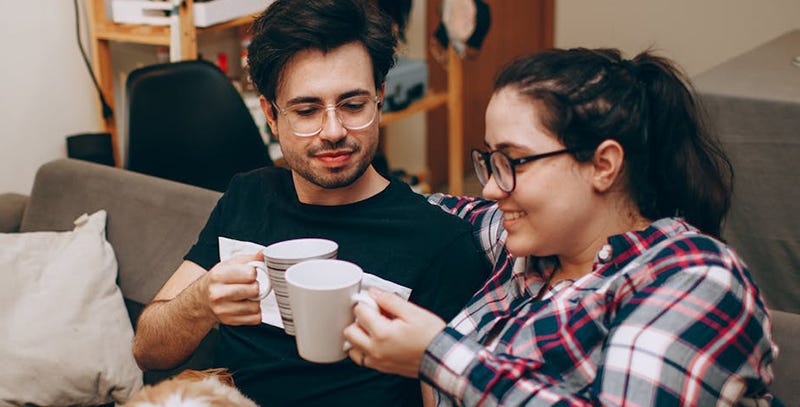
The Relationship as a Container For Healing and Growth
As an active part of personal healing and growth, creating and maintaining an Alive Relationship will occasionally become uncomfortable. It is a fact of personal evolution that, when you push into the growth edges of change, the safety of your previous way of being in the world is challenged. Letting go of the relative safety of familiarity can be very uncomfortable, sometimes excruciatingly so.
It makes sense then, to create a safe and supportive an environment in which to intentionally lean into these uncomfortable spaces. Ideally, this would be a fully supportive close relationship – an ongoing partnership in which it is mutually safe to navigate these sometimes stormy waters.
The ideal of mutuality is more important than it might sound. If the relationship develops in such a way that one partner is primarily the supporter of the other, it can become co-dependent very quickly. That is a condition in which the aliveness of the relationship cannot hold. It becomes out of balance and eventually collapses.
Alive Relationships require fully and mutually supportive conditions in which all partners involved can heal and grow. Over time, this kind of relationship can deepen into something extraordinary. However, the three elements need to be present and in balance over time in order to create and maintain the container in which to thrive.
Safe To Be Vulnerable
The feeling of safety is dependent on the ability of each partner to rely on – to trust – the other. Safety and acceptance are not negotiated or negotiable aspects of relationship. They are earned.
Feeling safe is one of three basic human needs. And yet, the feeling of safety alone is not one of the defining elements of the aliveness of the relationship. It is not defining, though it is necessary.
Everyone agrees that Audrey and Tim have a wonderful relationship. They are considerate, spend lots of quality time together, and openly enjoy each other’s company. They are easily affectionate, even in public, and are careful about supporting and caring for each other. In that regard, they both eagerly learn and practice ways to improve their communication and listening skills.
And yet, Audrey feels that something is ‘off,’ though she cannot put her finger on what that might be. Furthermore, she finds it difficult to talk to Tim about her discomfort until she has a better idea of what the feeling is about. Since she can’t describe it, she is concerned that he will misunderstand and perhaps think that she is hiding something, or that he might think less of her for some reason.
She trusts Tim, but doesn’t feel that discussing such a vague notion is worth the potential exposure or risk.
It is important to be able to be vulnerable in the relationship, to be able to take a chance on not being completely understood or accepted. It is certainly okay to hold back, assess, gauge, and even doubt the safety of expressing vulnerability. In fact, feeling safe without any doubt is arguably naïve. Nonetheless, feeling that vulnerability is ultimately not safe suggests that the aliveness of the relationship can only develop to a certain point and likely no further without being addressed.

Willing To Engage In Uncomfortable Topics
Not only is it necessary to feel safe enough to be vulnerable, the partners need to be willing to take the next important steps. They need to be willing to lean into and engage in exploring topics and situations that make them uncomfortable. They need to be willing to take a chance, to be willing to push into the boundaries of “safe and comfortable” in order to encourage change.
In order to last longer-term, the relationship needs to be flexible enough to accommodate change, and the only way to ensure that is to feel sufficiently safe – and willing – to engage in topics that are uncomfortable for one or all of the partners.
A few weeks later, Audrey continues to have the same vague discomfort about the relationship. Something still feels “off” even though she has been unable to identify what it might be. She does realize, though, that the feeling is neither going away nor getting worse. Still, it remains in the background of her feelings about Tim or the relationship, and she is both unable to dismiss it or to discuss it without more clarity.
One afternoon, Tim’s phone rang. He answered the call with a friendly greeting, which soon shifted into a more somber tone – to Audrey, it seemed almost secretive. Then, without explanation, he left the room to continue the discussion privately.
Audrey felt her stomach sink. Tim’s leaving the room for an intense private conversation resonated with the sense that something in the relationship was missing or out of balance. Suddenly, that feeling had an anchor point. Tim was hiding something. She struggled not to make up a story about what it might be, yet even so, the feeling of betrayal was real.
Everyone has the right to privacy and to hold secrets that they are not required to expose for the sake of the relationship. Personal agency is fundamental in human relations, and a cornerstone of trust in committed relationships. Being able to be vulnerable does not require anyone to provide unfettered access to another.
In fact, such a demand cannot be part of a balanced, caring, and living relationship. It is more akin to emotional abuse and mental slavery. However, it is also an example of the kind of topic that is inherently uncomfortable for most partners to discuss. To what extent is the relationship able to manage the issues around personal secrets and how the partners will express their agency in sharing?
The phone call concluded, and Tim eventually returned to the room. He apologized for leaving, though he said nothing about who had called or what they had discussed that seemed to be so distressing.
Audrey sat with her feelings for a while, then decided she needed to do something.
“Tim, we need to talk.”
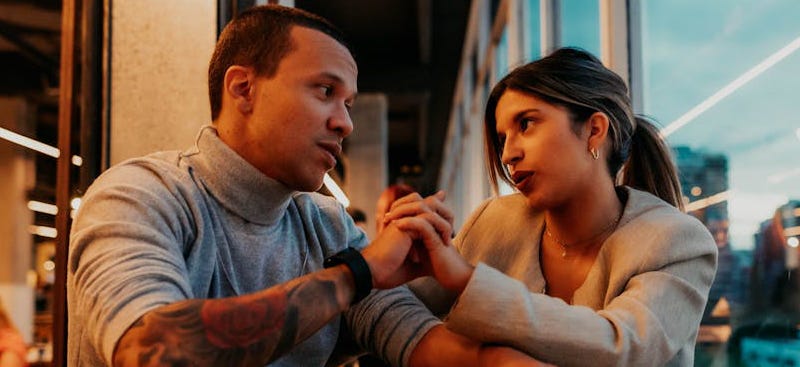
Evolutionary and Growth-oriented
An underlying understanding exists in successful long-term Alive Relationships, whether overt or implicit, that each of the partners desires and intends to grow and evolve personally, and that the partners agree to participate in that evolution. This shared intention rests upon both the feeling of being safe enough to be vulnerable and capable of leaning into and engaging in uncomfortable topics.
The third element affords an additional quality that distinguishes an Alive Relationship from others: the partnership is an active agent and support for personal growth and development. Again, the intention toward personal growth is most sustainable when in balance.
Tim took a deep breath and acknowledged to himself that he was afraid. Not concerned; he was afraid. For a long moment, he regretted not having said something sooner, but there was nothing to do about that now.
Fortunately, Audrey had easily agreed to Tim’s suggestion to move to the deck for the discussion. They sat side-by-side on the small outdoor couch and sipped wine for a few minutes, each gathering their thoughts.
“I feel like something is out of balance between us lately,” Audrey began. “Honestly, I haven’t brought it up because I have not been able to get a handle on what I was concerned about until this evening. I think something is bothering you. Am I wrong? Help me understand.”
Tim nodded. “Something has been bothering me, and I am sorry that I haven’t said anything earlier. Honestly, I had hoped that things would resolve themselves, but they haven’t. As of tonight, I am not sure they will. But frankly, Audrey, I really cannot say anything about it right now. I made a promise to keep it confidential, and I can’t break that promise. I hope you will understand.”
Audrey was surprised by how quickly she sorted through her thoughts and concerns about whether or not Tim was being honest. He had proven to be trustworthy many times, and his explanation this time felt honest. This time, that was good enough.
She was also pleased that she had resisted the urge to fall back into earlier patterns of creating fear-based disaster stories about what might be going on. She gave herself a quiet pat on the back.
“Next time,” she said, “just let me know. Trust me to trust you.”
Tim smiled, nodded. “I hear you.”
The quality of being evolutionary and growth-oriented does not mean that the partners need to be at the same developmental stage or point of evolution. People develop in different ways, more like waves than a straight line. It means that the partners are actively working toward self-development in the long term. They understand that personal growth happens incrementally and is sometimes uneven.
Creating and nurturing a long-term Alive Relationship is not about competition or comparison. It’s about being committed and available to the best of one’s abilities for themselves and their partners, to the benefit of the evolution of all, whatever the situation.
Please share and subscribe free to this publication with my gratitude. If you find resonance with the content, please consider becoming a paid subscriber. Your contribution helps sustain this effort. Thank you.
Contributing editor: Stephanie Reynolds, Ph.D.
Image credits: (top) Helena Lopes, Belo Horizonte - State of Minas Gerais, Brazil; (middle) Ron Lach; (bottom) Gera Cejas, Buenos Aires.
The award-winning Spirit Paths: The Quest for Authenticity, by Gerry C Starnes, offers more insights about the Journey of Personal Evolution.
www.SpiritPathsBook.com
I like the side story so much 🥹
This is insightful and helpful information, brilliantly written.