

What Does 'Feeling Safe' Mean?
Can you imagine what it might be like to be able to relax into a space in which you can release the tension of hyper-vigilance that holds you transfixed by anxiety? That is what feeling safe means.

In an article from late 2024, I wrote that the most basic human need is to feel safe. Looking back, I realize I touched on something important without exploring it very deeply.
Safety often seems so obvious that we overlook it. We assume it is simply the absence of danger. We think of safety in terms of shelter, food, clothing, security, and protection from harm. Those things matter. When basic needs are not met, much of our attention naturally turns toward survival. It is difficult to focus on growth, learning, creativity, or connection when we are worried about making it through the day.
Yet safety extends far beyond physical survival. We can be in a space that is free of overt threat, and yet not feel safe.
Many of the struggles people experience in relationships, personal growth, and spiritual development can be traced to this same fundamental need. We may have a roof over our heads and food on the table, yet still feel unsafe in ways that deeply affect how we live.
We often speak of feeling safe in relationship, but what does that actually mean?

Safety Is Not About Agreement
For me, it points toward a felt sense that I can be myself without constantly needing to protect or defend who I am. I can speak honestly. I can ask questions. I can make mistakes. I can reveal uncertainty. I do not have to carefully manage every word or action in anticipation of criticism, rejection, humiliation, or attack.
This does not mean that everyone agrees with me. It does not mean that conflict never occurs. It does not mean that I always get what I want.
Safety and agreement are not the same thing.
In fact, some of the safest relationships I have known included significant disagreement. What made them feel safe was the shared understanding that disagreement would not threaten the relationship itself. Both of us, as partners, remained committed to understanding rather than winning.
When we do not feel safe, something different happens: our attention narrows.
When we feel unsafe, even when we are perfectly, demonstrably, physically safe, we become more vigilant. We watch for signs of danger. We become increasingly focused on managing risk and avoiding pain. We may withhold parts of ourselves. We become cautious about what we say, what we reveal, and how much of our authentic experience we allow others to see.
Most of this happens automatically as our mind and body try to protect us. The challenge is that protection comes at a cost. Energy devoted to self-protection is energy unavailable for growth. You have probably noticed that when you do not feel safe in your situation or partnership that at the very least:
Curiosity begins to fade.
Creativity becomes constrained.
Playfulness disappears.
Authenticity becomes difficult.

Many people have experienced this dynamic in an unsupportive relationship. The relationship may not be openly abusive. There may be no obvious conflict. Yet a person gradually learns that honesty leads to criticism, vulnerability leads to discomfort, or personal growth is subtly discouraged.
As a result, they begin shrinking parts of themselves in order to maintain stability. And that pulling back is both a symptom of and cause of the erosion of trust, which in turn may destroy the relationship.
Trust Begins With Safety
People often think of trust as a decision. Sometimes it is. More often, trust develops through experience. It is true that trust is not given; it is earned. It is earned through small actions that accumulate over time – small actions that support the possibility that you are safe.
I reveal something true about myself.
The other person receives it respectfully.
Nothing terrible happens.
A little more trust develops.
With consistency in these small steps, the relationship becomes a place where honesty feels increasingly possible. Honesty and reliability create and support a mutual sense of safety. Trust grows because safety has been demonstrated repeatedly.
That ongoing honesty, reliability, and consistency offers the potential to create a safe enough space to relax the sense of hyper-vigilance and rest into the relationship.
In this sense, trust is built less through promises than through experience.
The same principle applies to our relationship with ourselves.
Many people struggle to trust their own thoughts, feelings, intuition, or insights. Sometimes this is because they have learned to judge themselves harshly whenever they make a mistake. They create an internal environment that feels unsafe.
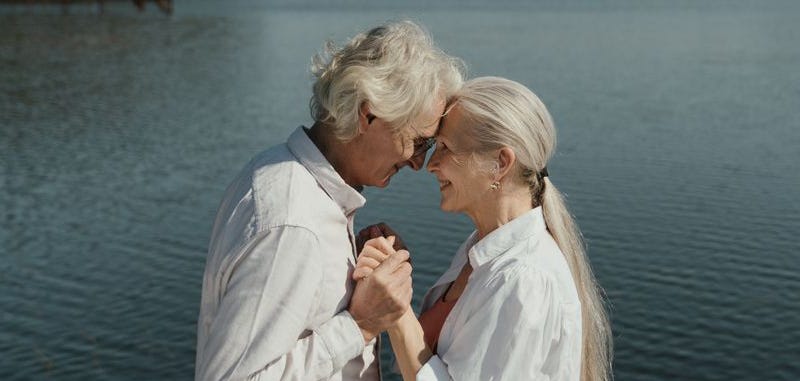
Authentic Evolution Requires Trust
If every error becomes evidence of failure, learning becomes difficult. If mistakes are viewed as opportunities to learn, exploration becomes possible. The inner environment becomes safer, and trust in oneself begins to grow.
As I reflect on safety, I am increasingly convinced that it serves as a foundation for authenticity.
People reveal themselves to the degree that they feel safe enough to do so.
They share their hopes.
They express their fears.
They communicate their needs.
They establish boundaries.
They allow themselves to be seen.
Authenticity always involves some degree of risk. Yet without sufficient safety, most people will choose protection over openness. The choice is understandable. It is also limiting.
The irony is that authentic expression is often one of the very things that creates greater safety. When one person speaks honestly and another responds with respect, both trust and safety deepen. The relationship becomes stronger, more resilient, and more alive.
In the presence of trust and the feeling of safety that it is built upon, the relationship becomes stronger, more resilient, and more alive.
Many relationships survive for years without much aliveness. They become functional, predictable, and carefully managed. People learn how to avoid upsetting one another. Difficult conversations remain untouched. Important truths stay unspoken.
The relationship may continue, yet something vital is missing: its Aliveness.
Aliveness emerges when people feel safe enough to bring their full presence into the relationship. Their curiosity. Their humor. Their dreams. Their uncertainty. Their grief. Their growth.
This is why the feeling of safety matters so much. Safety is not merely protection from harm. It is the bedrock condition that allows life to emerge.
Where safety is present, trust can grow. Where trust grows, authenticity becomes possible.
Where authenticity becomes possible, relationships become more fully alive.
Please share and subscribe free to this publication with my gratitude. If you find resonance with the content, consider becoming a paid subscriber.
The award-winning Spirit Paths: The Quest for Authenticity, by Gerry C Starnes, offers more insights about the Journey of Personal Evolution.
www.SpiritPathsBook.com
Contributing Editor: Stephanie Reynolds, Ph.D.
Image credits: (top) Ivan S; (middle, bottom) Cottonbro Studio.
So true. One thing that comes to my mind is that there may be (possibly often) times when there is a disconnect between one person feeling safe and therefore more confident, authentic, and confiding, which may be a trigger for another person with low self-esteem and who may feel unsafe in many parts of their life. So... to feel truly safe personally, I think it must involve an evolved empathy towards others who may not feel so safe.
I'm extremely thankful for this timely serendipitous wisdom, Mr Gerry Starnes!