

What Does "Feeling Useful" Mean?
Most people want to know that their presence matters. They want to feel that what they do contributes something of value to the people and communities around them. They want to feel useful.

In a previous article at the end of 2024, I wrote about three basic human needs: feeling safe, feeling heard, and feeling useful. In the past two articles, I explored more deeply the need for feeling safe and the importance of feeling heard.
The third of the basic human needs that receives surprisingly little attention is the need to feel useful.
We often speak about success, achievement, productivity, and accomplishment. Entire industries are built around helping people become more effective. Yet beneath all of that is something simpler and more fundamental. Most people want to know that their presence matters. They want to feel that what they do contributes something of value to the people and communities around them.
Conversations about usefulness can easily become tangled with questions of worth. Many people quietly carry the belief that they are valuable only when they are producing, fixing problems, caring for others, or meeting expectations. When usefulness becomes tied to self-worth, it often turns into a burden rather than a source of fulfillment.
That is not the kind of usefulness I am talking about.

The experience of feeling useful begins with contribution. It arises when we recognize that our actions, abilities, insights, or presence positively affect something beyond ourselves. Sometimes that contribution is large and visible. More often, it is small and easily overlooked.
A kind word offered at the right moment can change someone’s day. A thoughtful question can help another person find clarity. A shared skill can solve a problem. Even simple reliability can become a gift to a family, a workplace, or a community.
The need to feel useful seems deeply connected to our nature as social beings. Human beings rarely thrive in complete isolation. We develop ourselves in relationship with others, and part of that development involves discovering how we can contribute. We want to know that we are not merely taking up space. We want to know that our presence adds something.
When that need is met, something important comes alive within us.
People often become more engaged, more creative, and more willing to participate when they feel their contributions matter. Energy that might otherwise be spent defending, proving, or comparing can be directed toward creating, helping, and building. A sense of connection grows naturally because contribution strengthens the bonds between people.
When that need is not met, the effects can be surprisingly significant.

A person may be surrounded by others and still feel disconnected if they believe they have nothing meaningful to offer. They may withdraw, become discouraged, or lose motivation. Sometimes the problem is not a lack of ability. The problem is that they cannot see where their abilities fit or how their contributions matter.
I have seen this happen during periods of major life transition. Retirement, job loss, illness, relocation, and other significant changes can disrupt familiar ways of contributing. People who once felt needed may suddenly question their place. The challenge is not merely finding something to do. It is rediscovering how they can participate in a meaningful way.
One of the difficulties is that our culture often narrows the definition of usefulness. Economic value tends to receive the most attention. If an activity generates income, produces measurable results, or creates visible success, it is considered useful. Other forms of contribution are frequently overlooked.
Yet some of the most important contributions in our lives cannot be measured that way.
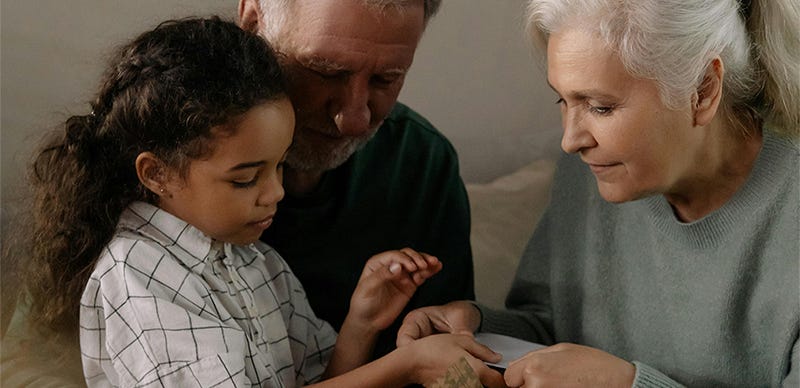
Listening to a friend during a difficult time is useful. Encouraging a child is useful. Caring for an aging parent is useful. Preserving knowledge, sharing wisdom, creating beauty, mentoring others, and strengthening community are all forms of contribution. Their value may not appear on a spreadsheet, but their impact can last for generations.
Perhaps this is why usefulness is so closely connected to meaning.
Meaning often emerges when we recognize that our lives participate in something larger than our individual concerns. We discover that our actions ripple outward. We begin to see that what we do affects others, sometimes in ways we never fully understand.
The question then becomes less about proving our value and more about discovering our place.
What gifts, skills, experiences, or perspectives do we carry that can serve others? Where are we naturally drawn to contribute? What communities, relationships, or causes call forth our participation?
The answers are different for each person.
Some people contribute through leadership. Others contribute through quiet support. Some teach. Some build. Some heal. Some organize. Some create beauty. Some simply bring steadiness and presence wherever they go.
None of these roles is inherently more important than another.
Healthy communities depend upon many forms of contribution working together. The visible roles often receive the most recognition, but countless unseen acts of service make those visible roles possible. Every thriving family, organization, and community rests upon contributions that are rarely celebrated.
Community is often spoken of as though it were something we find or join. Increasingly, I have come to see that community is something we build.
We build it through participation, contribution, reliability, encouragement, service, and presence. Every act that strengthens connection adds something to the whole. Many of these contributions are small enough to go unnoticed, yet communities depend upon them.

It is meaningful that the same community we help build becomes available to support us when we need it. There are seasons when we are able to contribute more, and seasons when we require more support. Healthy communities make room for both.
Perhaps this is one reason feeling useful matters so deeply. It is not simply about helping others. It is about participating in a network of mutual support where giving and receiving both have a place.
When we contribute to the well-being of others, we strengthen the very community we may someday need to lean into ourselves.
This realization can be freeing.
We do not have to become extraordinary in order to be useful. We do not have to change the world to contribute meaningfully to it. The opportunity to be useful appears every day through ordinary acts of participation.
A conversation. A kindness. A skill shared. A responsibility fulfilled. A burden carried alongside another person.
These moments may seem small, yet they are often where usefulness is experienced most directly.
Perhaps feeling useful is ultimately the recognition that our lives are connected. We affect one another. We support one another. We participate in something larger than ourselves.
When we know that our presence contributes to the well-being of others, even in modest ways, a deep human need is fulfilled.
We discover that we belong not only because we are accepted, but because we have something meaningful to give.
Please share and subscribe free to this publication with my gratitude. If you find resonance with the content, consider becoming a paid subscriber.
The award-winning Spirit Paths: The Quest for Authenticity, by Gerry C Starnes, offers more insights about the Journey of Personal Evolution.
www.SpiritPathsBook.com
Contributing Editor: Stephanie Reynolds, Ph.D.
Image credits: (1, 4) Matheus Bertelli, Community Manager, Pexels in Brazil, São Paulo, State of São Paulo, Brazil; (2) Julia M Cameron, (3) cottonbro studio.